

Leading the Design of an AI-First Sales Assistant
Company: HubSpot
Role: Senior Design Manager, Breeze AI
Project Team: 2 Product Designers
TL;DR
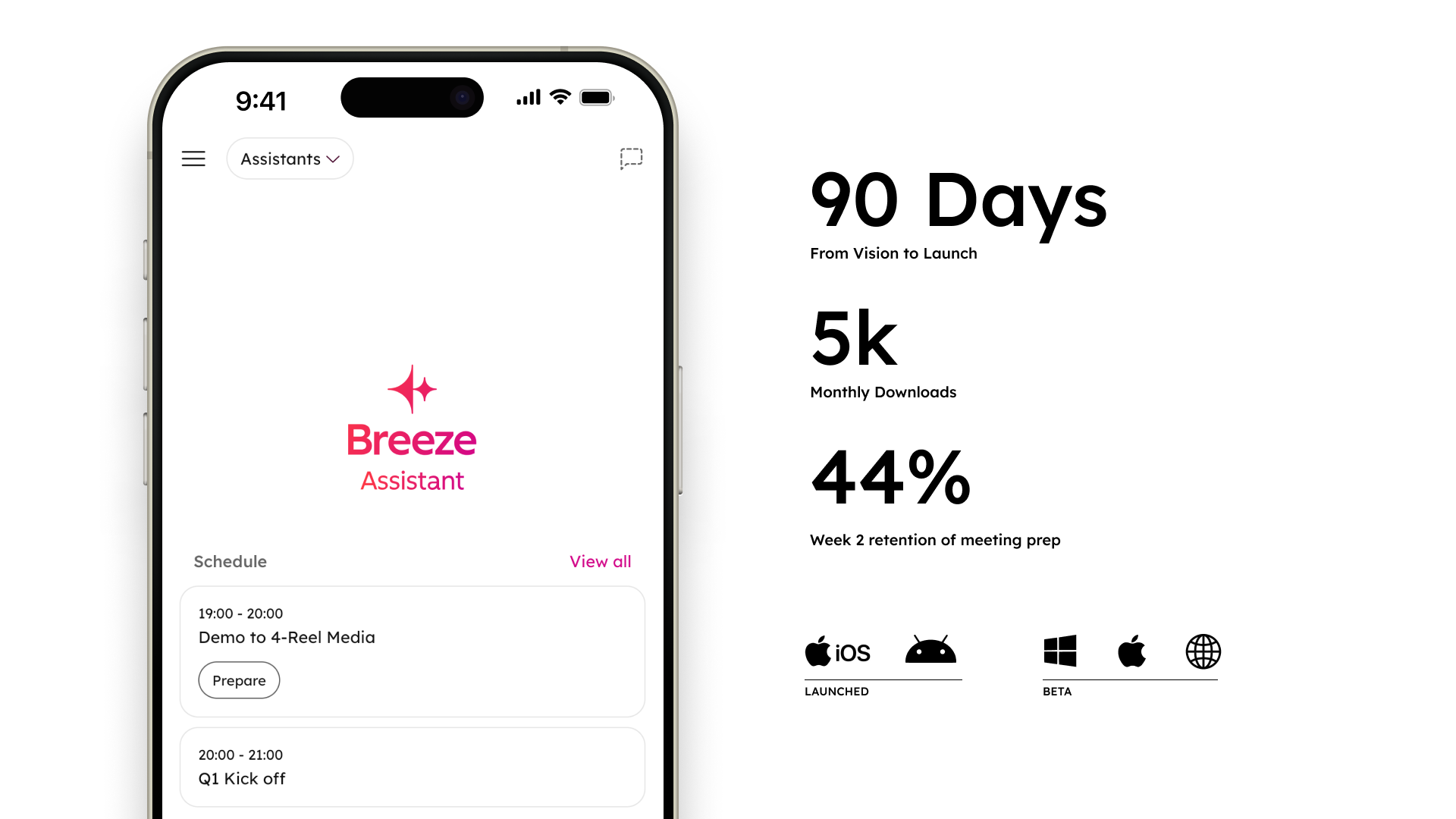
Led the design and delivery of a production-quality AI-first sales assistant in 90 days, operating in a player-coach model. Unified design, engineering, and AI into one system, replacing fragmented sales prep with an intent-driven workflow used weekly by thousands of reps.
1-Minute Product Walkthrough
This one minute video is designed for time-poor managers and reviewers who want to understand the product without reading the case study.
Problem
HubSpot has some of the richest customer and deal data in SaaS, but sales reps were not using AI as part of their daily workflow. Preparing for customer meetings was still manual, fragmented, and time-consuming. Reps stitched together CRM records, notes, emails, and call history before every call.
As one sales manager put it:
If a rep is on their laptop doing admin, that's the kiss of death. It means they're not selling.
Existing AI features were bolted onto legacy workflows. Adoption was low, trust was inconsistent, and AI added work instead of replacing it.
The risk was clear: if AI remained a feature rather than a core workflow, HubSpot would fall behind competitors building AI-native sales tools.
Goal: Design and ship an AI-first sales assistant that reduced prep time, fit naturally into a rep's day, and proved its value through weekly active usage.
Solution Overview
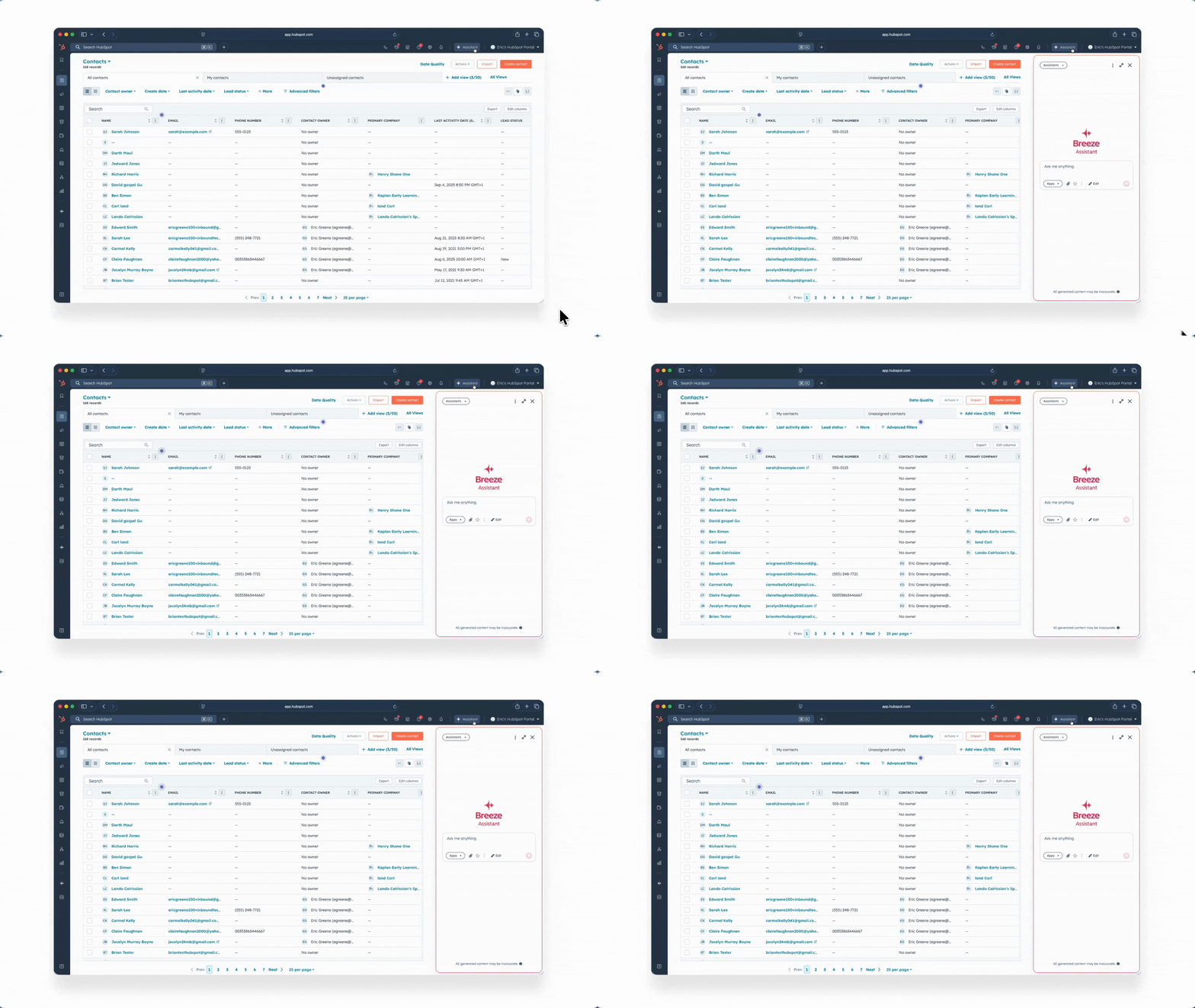
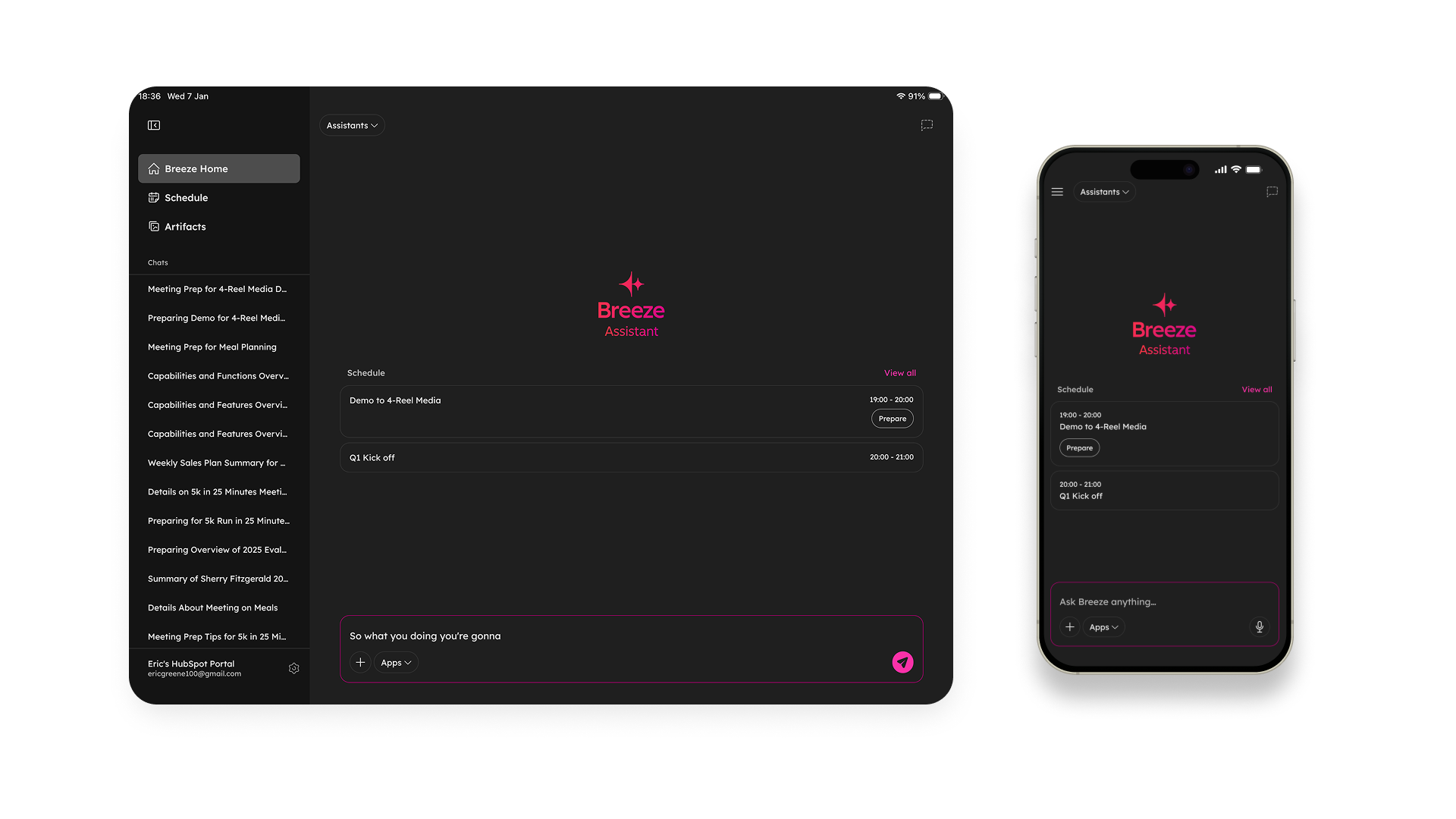
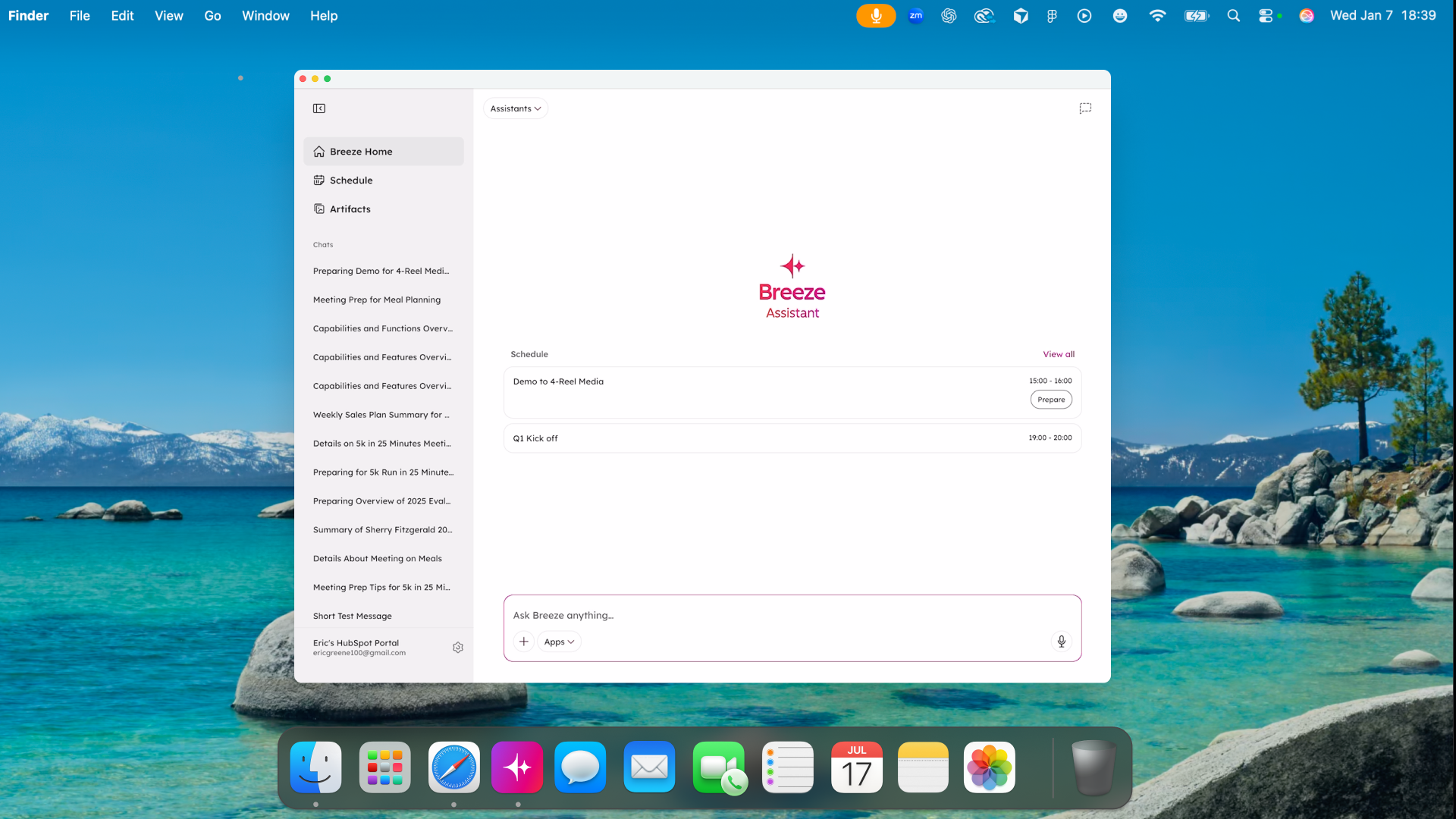
I led the design and delivery of Breeze Assistant, a standalone AI-first product created to break free from HubSpot's legacy UI and validate a new interaction model for AI-driven work.
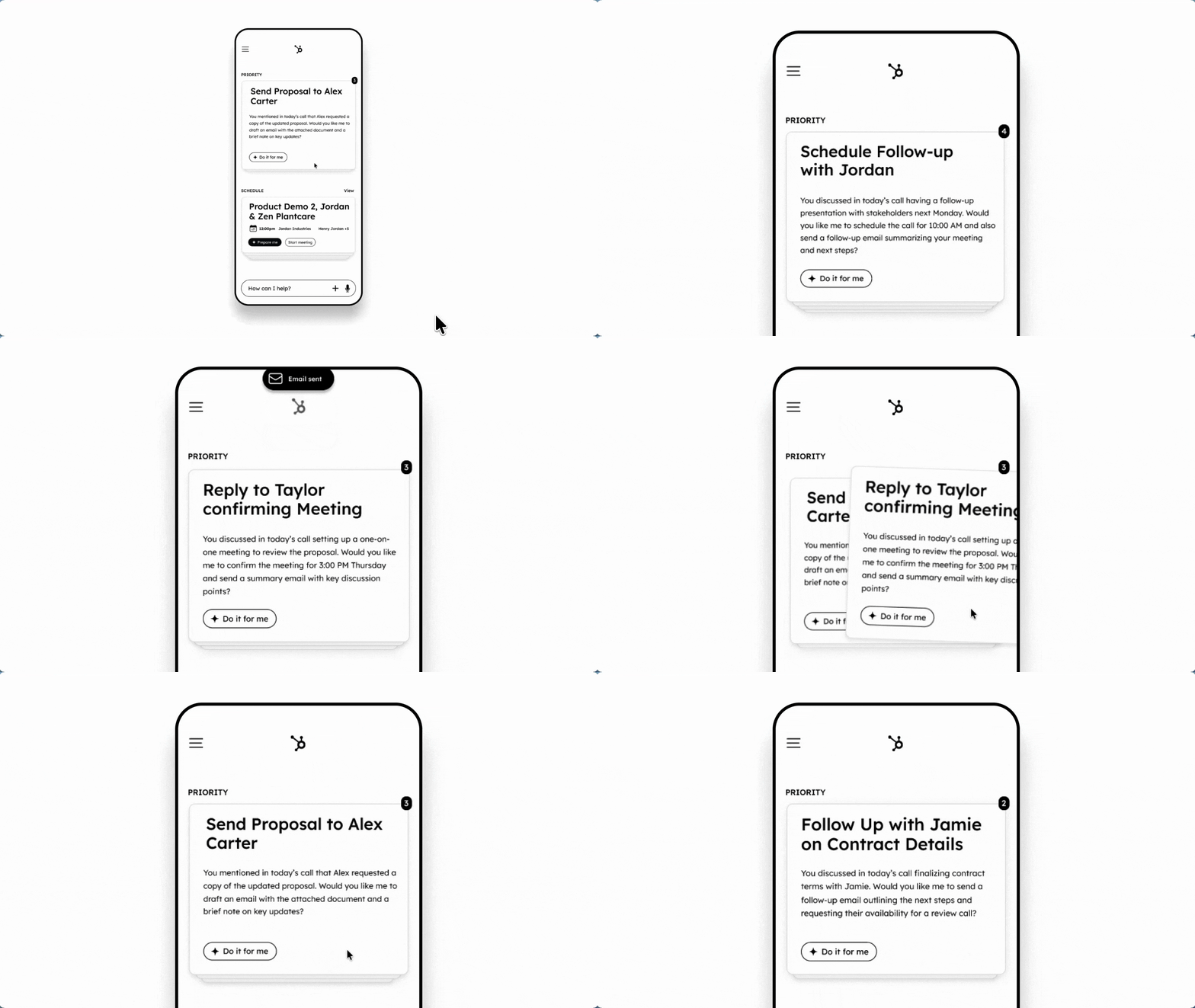
Rather than adding AI to existing screens, we redesigned the workflow around intent and let AI orchestrate systems on the rep's behalf.
Constraints
- Fixed 90-day deadline tied to INBOUND
- Production-quality iOS and Android required from day one
- No net-new headcount
- Legacy design system not built for AI-first interactions
- High executive visibility and delivery risk
Team and Leadership Model
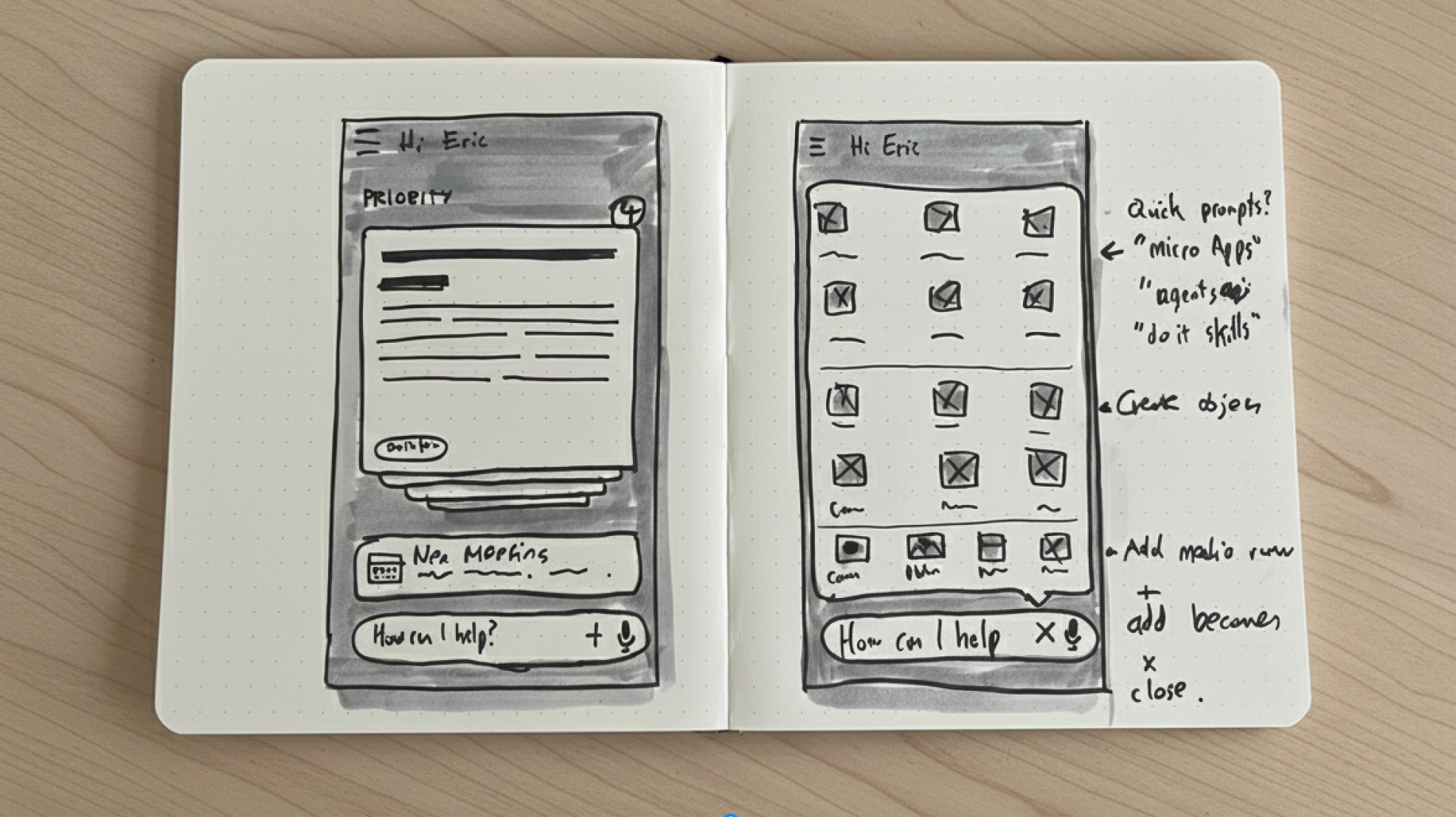
I led a small, senior design team operating in a player-coach model. I set the overall UX vision, interaction model, and quality bar, while delegating ownership of the design system and continuous MVP validation to senior designers and their pods. This structure allowed the team to move quickly without fragmenting the experience.
Strategy and Hypothesis
We hypothesised that meaningful AI adoption required:
- A deliberate break from legacy UI and navigation
- A shift from feature navigation to intent expression
- A product surface where AI orchestrates systems, not just answers questions
This meant prioritising speed, clarity, and judgment over configurability.
Key Product Decisions
Standalone app over embedded UI
Escaped legacy constraints and allowed a clean AI-first interaction model.
Intent-led workflows over chat-first interaction
Moved away from generic conversation toward task-specific orchestration.
Opinionated defaults over flexibility
Optimised for fast execution, not enterprise configuration.
Design and engineering as one system
AI behaviour was iterated directly in code, not frozen in static artifacts.
Core Workflow: Meetings as the Wedge
We anchored execution in high-frequency, high-friction workflows. Mobile sales reps emerged as the clearest opportunity: over 300,000 HubSpot users use the mobile app weekly, primarily for meeting preparation and follow-up.
We focused on a single workflow: managing meetings before, during, and after they occur.
When a rep selects a meeting, the system:
- Inspects CRM records
- Pulls recent company updates and relevant external context
- Retrieves prior notes and open actions
- Synthesises a task-specific interface
The UI acts as a gateway. The intelligence does the work.
No searching.
No tab switching.
No manual prep.
Beyond meeting preparation, we built features that removed friction from how reps capture and process information. An OCR scanner converted business cards and documents directly into contacts and notes. Long-form dictation with speech-to-text allowed reps to capture detailed notes and action items hands-free while moving between meetings or locations.
Design, Engineering, and AI as One System
This project removed traditional handoffs.
I managed and coached the design team while working directly with engineers in production code and LLM instruction files to remove handoff friction and accelerate decision-making. AI behaviour, interaction design, and UI evolved together as one system.
In parallel, we created a lightweight, responsive, AA-accessible design system purpose-built for AI-driven workflows and aligned with the Breeze AI brand.
Design decisions were validated in production, not in review decks.
Outcomes
- Production iOS and Android apps shipped in under 90 days
- Public launch at INBOUND
- ~5,000 downloads per month
- 44% week 2 retention
For reps, Breeze replaced multiple tools. Instead of checking CRM, email, calendar, and documents separately, meeting prep happened in one place while AI handled aggregation and synthesis.
Organisational Impact
- Established shared AI interaction principles adopted across teams
- Created a reference model for AI-first workflow design
- Demonstrated a faster, smaller-team delivery model under executive scrutiny
- Shifted internal thinking from "where do we add AI?" to "what work should AI own?"
AI moved from feature thinking to platform thinking.
Reflection
Speed did not remove complexity. As a standalone AI product, Breeze attracted more stakeholders than team members at times.
With hindsight, I would have been more aggressive in shielding the team from organisational overhead and clarified ownership of AI behaviour earlier. Ambiguity here slowed progress more than technical constraints.
Core lesson: In AI-assisted product development, design leadership is about judgment, constraints, and focus, not artifact production.